
Traditional education often evokes memories of passive learning—sitting and listening to lectures or memorizing content solely for final examinations. However, at St. Andrews International School, Green Valley, we believe 21st-century education must answer a more vital question: how can children apply what they learn to the world beyond exam results?.
To address this, we shift the focus from academic achievement alone to a holistic process of self-discovery and global understanding. By prioritizing experiential learning in schools, we transform students from passive recipients of knowledge into active participants who learn by doing, ensuring they are truly prepared for life in a rapidly changing world.
What Is Experiential Education?
Experiential education is a learning approach that encourages students to engage actively through hands-on experiences, experimentation, problem solving, and reflection on their learning. Rather than receiving information passively, students learn through direct involvement.
This approach is often described as learning by doing, highlighting experiential education benefits that allow learners to apply knowledge in real or realistic situations. Experiential learning in schools helps bridge the gap between theory and practice, making learning more meaningful and relevant.
Examples of experiential learning include:
- Project based learning
- Laboratory experiments
- Outdoor and off-site learning.
- Group activities and scenario-based problem solving
- Integrated learning across multiple subjects.
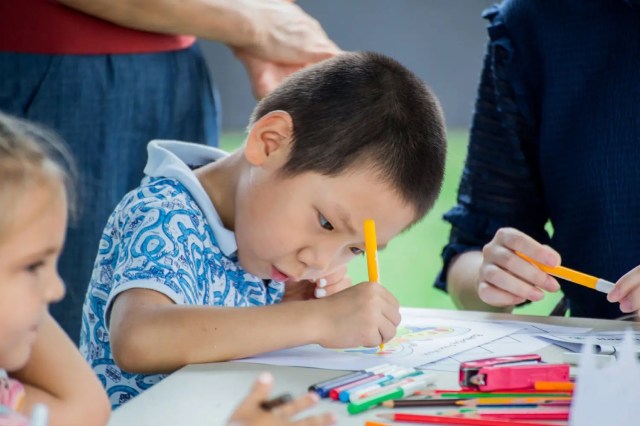
Experiential Learning Benefits for Students
Beyond classroom outcomes, experiential education benefits students across multiple dimensions, including academic understanding and essential life skills needed in the real world. Experiential learning benefits extend far beyond grades, supporting holistic student development.
1. Deeper Understanding Beyond Memorisation
One of the most significant experiential learning benefits is the depth of understanding students develop. When learners experiment, engage in learning by doing, and observe outcomes firsthand, they gain genuine comprehension rather than short term memorisation for exams. For example, studying science through real experiments enables students to grasp concepts far more effectively than reading explanations alone. These hands-on learning benefits help knowledge stay with students long after the lesson ends.
2. Development of Critical Thinking and Problem Solving Skills
Experiential learning in schools often involves challenges or situations without a single correct answer. Students must ask questions, analyse information, test ideas, and adapt their approach based on results. This process strengthens critical thinking and problem-solving skills, both of which are essential for advanced learning and future careers. Experiential education benefits students by preparing them to navigate complex and unfamiliar situations with confidence.
3. Strengthening Collaboration and Social Skills
Experiential learning activities frequently take place in group settings, allowing students to practise communication, active listening, role sharing, and teamwork. These hands-on learning benefits are vital not only for academic success but also for thriving in diverse and multicultural environments, which are a defining feature of experiential learning in schools.
4. Increased Motivation and Engagement in Learning
When learning extends beyond listening to lectures, students feel more motivated and engaged. One of the key experiential learning benefits is the shift from passive learning to active participation. Learning by doing fosters curiosity, confidence in trying new approaches, and pride in personal achievements. These hands-on learning benefits encourage students to take ownership of their learning journey.
5. Connecting Learning to Real Life
Experiential education helps students see how classroom knowledge applies to real-world situations, whether solving everyday problems, understanding society, or preparing for higher education and future careers. Experiential education benefits make learning more meaningful by showing students the practical value of what they study, reinforcing long-term understanding and relevance.
Experiential Learning in Schools Today
When experiential education is integrated into modern schools, teaching and learning practices change significantly in the following ways.
Integrated Learning Across Subjects
Experiential learning in schools often emphasises interdisciplinary learning. Projects may combine science, mathematics, language, and communication skills, allowing students to see the bigger picture of knowledge. This approach highlights experiential learning benefits by helping learners understand how different subjects connect and interact in real-world contexts.
The Role of Teachers in Experiential Classrooms
In experiential education, teachers are not only providers of information. Rather than delivering lectures, educators act as architects of discovery, facilitating inquiry and guiding students toward independent mastery. This role enables teachers to nurture both academic growth and essential life skills, reinforcing the long-term experiential education benefits for students.
Learning Environments That Encourage Action
Experiential learning requires environments that are open, safe, and supportive of exploration. These may include classrooms, laboratories, outdoor spaces, or off-site learning experiences. Such environments encourage students to express ideas, learn from mistakes, and fully experience the hands-on learning benefits that experiential education provides.

Long-Term Experiential Education Benefits
Experiential education continues to influence students well beyond their school years.
Preparation for Higher Education and Future Careers
Students familiar with experiential learning in schools often demonstrate strong independent learning skills, adaptability, and readiness to face complex challenges. These experiential learning benefits form a strong foundation for success in higher education and in a rapidly changing professional world.
Fostering a Positive Attitude Towards Lifelong Learning
When learning is engaging, meaningful, and connected to real life, students develop a positive mindset towards continuous learning. Experiential education benefits encourage curiosity beyond the classroom, laying the groundwork for lifelong learning, a key quality of future global citizens.
Conclusion
Experiential education is not simply a teaching approach that makes learning more enjoyable. It is a vital foundation for developing students who understand the world in a well-rounded way, academically, socially, and emotionally. Through learning by doing, questioning, experimenting, critical thinking, and reflection, knowledge extends beyond the classroom and becomes practical understanding that students can apply throughout life.
At St. Andrews International School, Green Valley, experiential learning in schools is embedded through open learning environments, real world connected curricula, and personalised student care. These experiential education benefits support each child in discovering their potential and growing in balance, both academically and in life skills.
If you are seeking a school that values meaningful learning over memorisation and believes that experience is the most powerful teacher, we invite parents to complete the enquiry form on our website to arrange a school tour. Experience our learning environment firsthand and speak with our professional team as we work together to build a confident and sustainable future for your child.