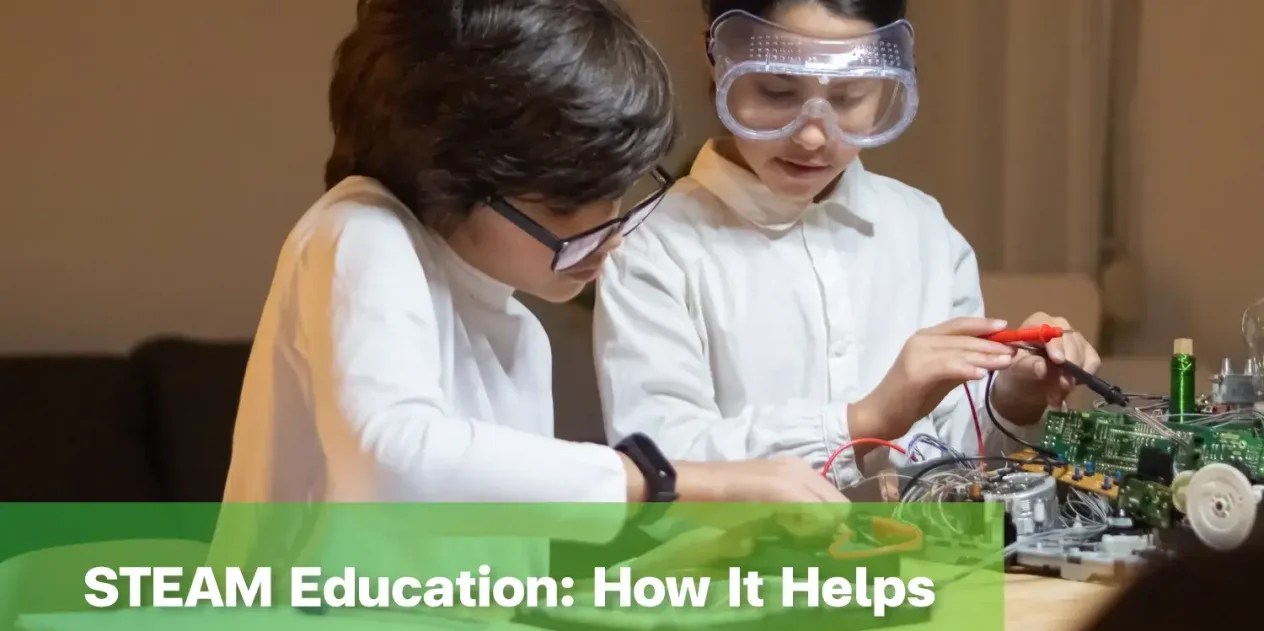
Topic Summary: An introduction to STEAM Education, explaining how science, technology, engineering, arts and mathematics work together to develop creativity, critical thinking, collaboration, problem solving and practical future-ready skills.
Content Summary:
- STEAM Education integrates science, technology, engineering, arts and mathematics to help students apply knowledge across different subjects.
- STEAM learning develops critical thinking, creativity, communication, collaboration and problem solving through practical, hands-on activities.
- A strong STEAM curriculum connects classroom learning with real-life situations, helping students build adaptable skills for university and the future.
The future world of work and everyday life will require more than strong academic knowledge in a single subject. Students will need to think critically, solve problems, collaborate with others and apply knowledge from different disciplines in creative ways. This is why STEAM education has attracted growing attention across the global education sector, particularly in international schools that aim to prepare students for university and an increasingly fast changing world.
At St. Andrews International School, Green Valley, academic development goes hand in hand with creativity, problem solving, communication and collaboration. This approach reflects the principles of STEAM education, which brings science, technology, engineering, arts and mathematics together through learning experiences that encourage students to think, experiment and create independently.
What Is STEAM Education And Why Is It Important?
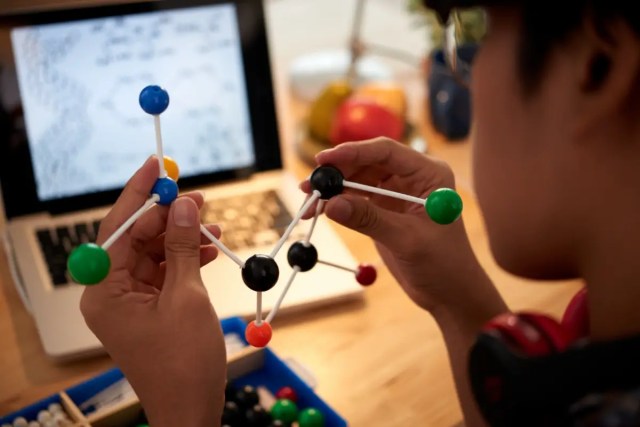
STEAM stands for 5 core disciplines: Science, Technology, Engineering, Arts and Mathematics. Rather than teaching each subject entirely in isolation, STEAM education encourages students to connect knowledge across different areas while learning through practical activities and solving problems that resemble real-world situations.
The central idea behind the STEAM meaning in education is that knowledge from different subjects does not exist separately in everyday life. A single project often requires students to draw on several disciplines at the same time.
For example, building a model bridge may involve understanding forces through science, using mathematical calculations, applying engineering design principles, using technology to create a model and incorporating creativity through art and design.
How Is STEAM Different from STEM?
Many parents and students may already be familiar with STEM, which stands for Science, Technology, Engineering and Mathematics. The main difference is that STEAM education adds Arts as an essential part of the learning process.
Within STEAM education, Arts does not refer only to drawing, music or performance. It also includes design, creativity, communication and the ability to approach a problem from different perspectives.
Adding Arts encourages students to ask questions such as: Is there another way to solve this problem? How could this design be easier for people to use? How can this idea be communicated more clearly?
In conclusion, STEM helps develop logical thinking and problem solving, while STEAM education introduces additional dimensions of creativity, design and communication. As a result, the learning experience can become broader and more connected.
What Subjects Are Included in STEAM?
One important point to understand is that a STEAM subject is not necessarily a completely new subject taught independently. Instead, a STEAM subject often brings several disciplines together through a topic, project or problem that students explore collaboratively.
The STEAM curriculum therefore focuses on connections between subjects rather than treating every area of knowledge as completely separate.
Science
Science helps students learn how to develop hypotheses, observe, experiment, collect data and analyse results. Students may explore topics ranging from living organisms and ecosystems to energy, forces and materials.
Technology
Technology teaches students how to select and use appropriate tools. These may include computer programmes, coding, digital devices or technology used to design and create projects.
Engineering
Engineering helps students develop a structured approach to problem solving. The process may include identifying a problem, designing a possible solution, creating a prototype, testing it and improving the final result.
Arts and Creativity
Arts encourage students to think creatively, understand design principles and communicate ideas effectively.
Within a STEAM subject, Arts can also help students approach problems from a more human centred perspective by considering areas such as usability, appearance and user experience.
Mathematics
Mathematics provides essential tools for measuring, calculating, analysing data and developing models. Through STEAM education, students can see that mathematics is not limited to exercises in a textbook. Mathematical knowledge can be used to design structures, compare data, calculate dimensions and solve practical problems.
Together, these 5 areas explain the STEAM full form in education and demonstrate how each STEAM subject can contribute to a wider learning experience.

Why Is STEAM Education Important?
The real value of STEAM education lies in the learning process itself and in the skills students can develop for the future.
It Helps Students Develop a Systematic Approach to Problem Solving
Many activities within STEAM education begin with a question or problem that does not have only one correct answer.
Students need to gather information, test different ideas and evaluate results independently. This process develops critical thinking and helps students understand that solving complex problems may involve several attempts before an effective approach is found.
It Encourages Creativity
STEAM education gives students space to explore different ideas without assuming that every problem has only one possible solution.
For example, if students are asked to design an energy efficient building, each group may choose different shapes, materials or technologies depending on the reasoning behind their approach. Students therefore practise both creative thinking and the ability to explain why they have selected a particular solution.
It Helps Students Learn to Work with Others
Many projects within a STEAM curriculum require teamwork. Students may need to divide responsibilities, share ideas, listen to different viewpoints and make decisions together. These skills are highly valuable for university study and future employment, where complex challenges often require people from several disciplines to work together.
It Connects Classroom Learning with Real Life
When students can see how classroom knowledge can be used to create something, solve a problem or improve the world around them, learning often becomes more meaningful.
Rather than learning a mathematical formula without context, students might use it to calculate the dimensions of a real structure. They may also use scientific knowledge to design a model water filtration system.
What Does a STEAM Curriculum Look Like?
An effective STEAM curriculum does not always require schools to create completely separate lessons or additional teaching hours. Instead, the principles of STEAM education can be incorporated across existing subjects or through project-based learning.
For example, students might be asked to design an environmentally friendly city. To complete the project, they may need to:
- Study energy and environmental topics through science.
- Calculate areas, dimensions and proportions using mathematics.
- Use software or technology to create models.
- Apply engineering principles when designing systems.
- Use art and design to develop the city and present their ideas.
Activities like these allow students to understand that knowledge from different areas can work together.

What Skills Can STEAM Education Develop?
Alongside knowledge from each STEAM subject, students can develop transferable skills that can be applied across many different situations. These include:
- Critical thinking: Students evaluate information, ask questions and consider which approach is most appropriate for the problem they are trying to solve.
- Creativity: Students explore new ideas and learn that one problem may have several possible solutions.
- Communication: Students explain their ideas, present their work and answer questions about the reasoning behind their decisions.
- Collaboration: Many projects within a STEAM curriculum require students to divide responsibilities and use the strengths of each team member effectively.
- Adaptability in problem solving: When an experiment does not produce the expected result, students learn to analyse what happened and try another approach rather than stopping with their first answer.
These skills demonstrate why STEAM education goes beyond learning the content of an individual STEAM subject. Students are also learning how to approach unfamiliar situations, communicate ideas and adapt when their original plans need improvement.
Conclusion
When students have opportunities to learn through practical experience, classroom knowledge can develop into skills that are useful in many different situations. Critical thinking, creativity, communication and collaboration are all valuable foundations for further study and future life.
For families who would like to experience the learning environment and understand the educational approach at St. Andrews International School, Green Valley, families can book a school tour to visit the school, speak with the team and discover how the learning environment can support each child’s potential.
Frequently Asked Questions About STEAM Education (FAQs)
Q: Does STEAM education require expensive equipment or technology?
A: No. STEAM education can begin with simple, everyday materials such as paper, boxes, string, building blocks or recycled materials. The most important part of STEAM education is the process of thinking, designing, testing and improving ideas, rather than the complexity or cost of the equipment being used.
Q: How can parents support STEAM education at home?
A: Parents can support STEAM education by giving children opportunities to ask questions, experiment and discover answers independently. For example, children might help measure ingredients while cooking, observe nature, create toys from reusable materials or discuss the reasons behind everyday events and objects.
Q: Can STEAM education help children discover their own interests?
A: Yes. STEAM education can help because students experience activities from several disciplines within the same project. Some students may discover that they enjoy design, while others may be more interested in coding, scientific experiments, mathematics or presenting ideas.