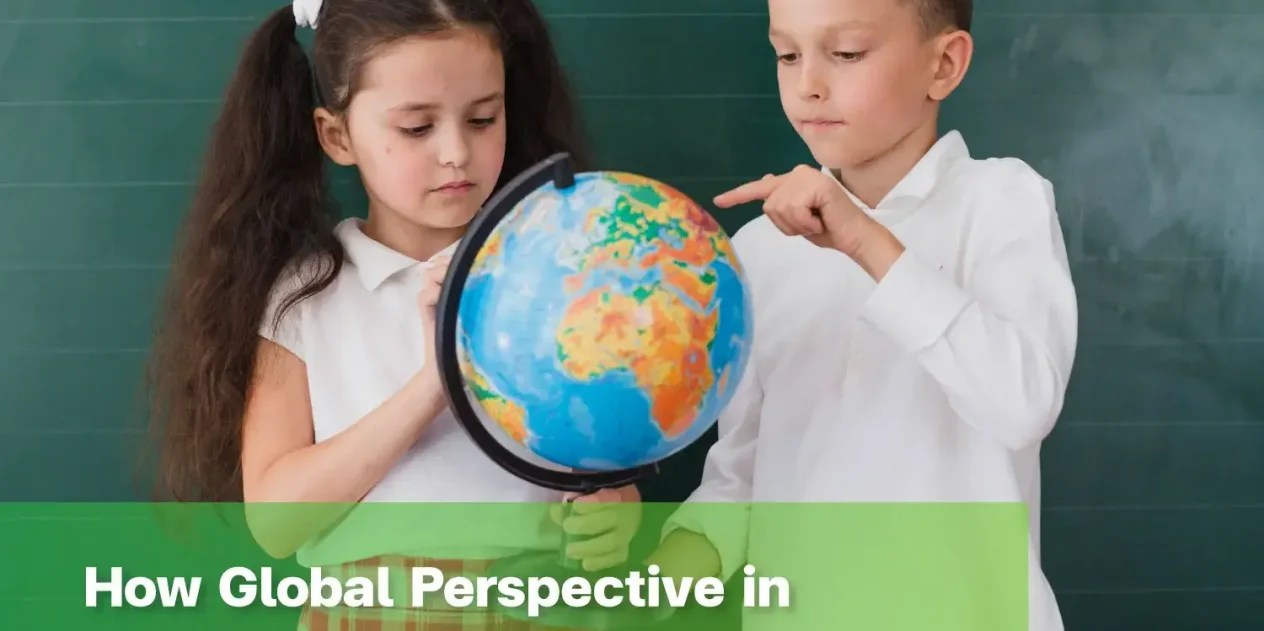
Topic Summary: Children build global perspective by exploring real-world issues, questioning information, respecting diverse viewpoints and reflecting on their role as responsible global citizens prepared for IGCSE, university and future life.
Content Summary:
- Children develop a global perspective by learning to view real-world issues through different cultural, social, environmental and economic contexts.
- Global perspective in education strengthens critical thinking, research, respectful communication and collaboration with people from diverse backgrounds.
- IGCSE Global Perspective prepares students for higher level study by encouraging evidence based thinking, independent enquiry and confident discussion of global issues.
In a world where children grow up surrounded by diverse people, languages, cultures, technologies and important events, today’s learners need to understand that what happens in one country can affect people in many other parts of the world. This may involve the environment, the economy, health, technology, equality or learning to live together in a diverse society.
For this reason, global perspective has become one of the key concepts in modern education. At St. Andrews International School, Green Valley, we aim to prepare students for the real world, including university, future careers and life in a society that is constantly changing. Through a global perspective in education, children learn to think from different angles, listen openly to different opinions, analyse information with reason and understand the connection between themselves and people in the wider global community.
What Is Global Perspective?
Global perspective is the ability to look at different issues through multiple dimensions. It means not judging a topic from only one personal viewpoint, but trying to understand the wider context, including culture, society, the economy, the environment, history and the thoughts of people who may see the world differently.
A clear global perspective definition is the ability to understand issues from different viewpoints and recognise how people, places and decisions are connected. It can be explained as a way of helping children think beyond themselves and consider the wider world with curiosity, empathy and reason.
For example, when children learn about plastic waste, they may not only learn that plastic can damage the environment. They may also ask why some countries use more plastic than others, what role consumers play, how much responsibility businesses should take and what children themselves can begin to change in their daily lives. This type of global perspective learning helps children become questioners, researchers and connected thinkers, which forms an important foundation for lifelong learning.
Why Is Global Perspective Important for Children Today?
Children today will grow up in a world where learning, work and communication are becoming increasingly international. Academic knowledge alone may not be enough if children do not also develop the ability to understand differences, think critically and communicate with people from a wide range of backgrounds.
Global perspective helps children develop many important skills, such as:
- Analytical thinking and the ability to evaluate information from different angles.
- Asking questions and conducting independent research.
- Listening openly to different opinions.
- Communicating with respect and reason.
- Working with others in diverse contexts.
- Understanding their role as global citizens.
These skills are important for higher level learning, especially when students need to carry out research, write essays, analyse case studies or exchange ideas in classrooms with peers from many countries. Global perspective in education is also valued by universities and modern organisations, because the world of work needs people who can think clearly, communicate effectively and understand the complexity of society.
How Is Global Perspective in Education Learned?
Global perspective in education should be designed so that children can take an active role in their learning. It should not be limited to reading articles or memorising facts about different countries. Instead, students should have opportunities to explore real issues, ask questions, work in teams and reflect on their own thinking.
Learning approaches that help develop global perspective include:
1. Learning Through Real World Issues
Children may learn about climate change, inequality in education, food security, responsible use of technology or human rights. These issues help children see that what they learn in the classroom is connected to real life and can lead to creative problem solving.
2. Asking Questions Rather Than Looking for Ready Made Answers
Global perspective learning places importance on questions such as “Who is affected by this issue?” “Where does this information come from?” “Are there other viewpoints we should consider?” and “Who might be affected by one decision?” These questions help children practise logical thinking and avoid reaching conclusions too quickly.
3. Working With Peers Who Have Diverse Ideas
In an international school, children often learn alongside classmates who have different cultures, languages and life experiences. Group work therefore becomes an important opportunity to practise listening, sharing ideas and respecting the opinions of others. Children learn that difference is not a barrier. Instead, it creates space for understanding, new ideas and more meaningful discussion.
4. Self Reflection
Global perspective does not only come from learning about other people. It also comes from reflecting on oneself. Children are encouraged to ask themselves what influences their own thinking, what biases they may need to be aware of and how they can contribute to society in a responsible way.
What Is Global Perspective in the IGCSE Curriculum?
Global perspective in the IGCSE curriculum, often known as IGCSE Global Perspectives, is a subject that helps students practise thinking, analysing, researching and communicating about global issues in a structured way. The strength of IGCSE Global Perspectives is that it does not focus on memorising content. Instead, it focuses on the thinking process and learning through the exploration of real issues.
Students learn through topics connected to the world today, such as the environment, technology, health, education, culture, conflict and sustainable development. They also develop research skills, learn how to evaluate sources, compare viewpoints and present their own opinions with clear reasoning.
For secondary students, IGCSE Global Perspectives has significant value because it helps prepare them for more complex learning at higher levels, including A-Level, the IB Diploma Programme or other university preparation pathways. Students who have practised analytical thinking and evidence-based communication are often better prepared when they need to write reports, complete research projects or take part in classroom discussions.
IGCSE Global Perspective also supports the wider purpose of a global perspective in education. It encourages students to become independent learners who can question information, recognise bias and understand how local and global issues are connected.
Conclusion
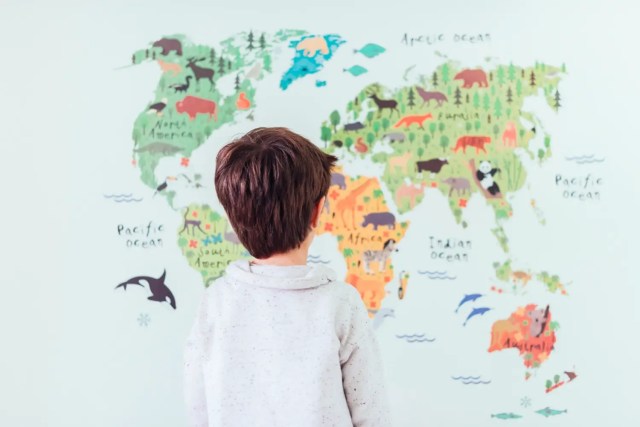
In an age where the world is closely connected, a good education should not only prepare children to succeed academically. It should also help them understand the world, understand others and understand their own role in society. Nurturing global perspective from school age lays an important foundation for children to move into the future with confidence, responsibility and a strong sense of global citizenship.
For parents looking for a school that values the development of a global perspective, St. Andrews International School, Green Valley offers a curriculum that combines strong academics with analytical learning and opportunities for students to broaden their worldview. To experience the learning environment in person, parents can book a school tour to visit the school and speak directly with the teaching team.
Frequently Asked Questions About Global Perspective (FAQs)
Q: How can parents help strengthen global perspective at home?
A: Parents can begin with familiar topics, such as discussing world news, cultures from different countries, food, languages, music or international festivals. They can then ask open-ended questions such as “How do you think people in that country might see this issue?” or “If we were in the same situation, what decision might we make?” This approach helps children practise looking at the same issue from different angles and learn to understand others more naturally.
Q: Do children need to be good at English before they can learn a global perspective well?
A: English is an important tool for accessing information and communicating in an international context. However, having a global perspective does not depend only on language ability. Children can begin developing this skill through asking questions, listening to other opinions, comparing information and understanding cultural differences. When children learn in a supportive environment, their language skills and global perspective can gradually grow together.
Q: How does global perspective support university preparation?
A: Global perspective helps students prepare for university because many universities value learners who can think analytically, communicate with reason and understand contemporary issues. Students who are familiar with research, comparing viewpoints and explaining opinions with evidence are often more confident when adapting to academic tasks such as essay writing, discussion, project work and learning in an international community.