Topic Summary: Explore how international schools develop critical thinking skills through discussion, problem solving, open-ended questions and interdisciplinary learning, helping students analyse information, evaluate perspectives and make thoughtful, independent decisions.
Content Summary:
- Strong critical thinking helps students question information, assess evidence, compare perspectives and make well reasoned decisions rather than accepting answers at face value.
- Discussion, problem solving, open-ended questions and interdisciplinary learning give students regular opportunities to practise logical thinking and explain their reasoning.
- Developing critical thinking from an early age supports independent learning, respectful communication, adaptability and better decision making in education, future careers and everyday life.
The world today is filled with information, opinions and answers that can be found within seconds. However, having access to large amounts of information does not always mean that people can make the right decisions. For children, what matters is learning how to ask questions, analyse information, compare different perspectives and use reasoning before reaching a conclusion.
These abilities are known as critical thinking, one of the most important skills for students both in the classroom and in everyday life. In international schools in particular, learning often gives students opportunities to participate actively, express their ideas, collaborate with others and explore issues from a variety of perspectives.
At St. Andrews International School, Green Valley, learning is not focused solely on helping students understand what the correct answer is. Equal importance is placed on the thinking process that helps children understand why they have reached a particular conclusion, what evidence supports their ideas and whether other perspectives should also be considered. These processes form an important foundation for developing critical thinking skills for students and preparing them for increasingly advanced learning in the future.
What Is Critical Thinking?
Critical thinking is the ability to consider information carefully, question what is presented, analyse reasoning and evidence, and evaluate the credibility of information before reaching a conclusion or making a decision.
Critical thinking is not about criticising or challenging everything. Instead, it teaches children not to accept information immediately or draw conclusions based on only one side of an issue. For example, when students read an article about a particular topic, they may learn to ask questions such as:
- Who provided this information?
- Is there evidence to support it?
- Is this information a fact or an opinion?
- Are there other perspectives that differ from this one?
- If certain conditions changed, how might the outcome change?
When children practise these processes regularly, they gradually develop the ability to think logically and form their own conclusions based on appropriate and reliable information.
Why Are Critical Thinking Skills for Students Important?
Critical thinking skills for students play a much broader role than simply helping children perform well in examinations or classroom activities. Critical thinking can be applied to almost every area of life.
- Children with a strong foundation in critical thinking are often better able to identify key points within large amounts of information, recognise connections between cause and effect, and consider several possible options before making decisions.
- When working in groups, students can listen openly to the opinions of others while explaining their own ideas through reasoning rather than relying on emotion alone.
- At a time when information from the internet and AI is easily accessible, critical thinking in education helps students learn how to check sources, compare credibility and avoid automatically accepting the first answer they encounter.
Developing critical thinking skills for students therefore supports both academic learning and the wider decision making skills children will need as they grow.

How to Develop Critical Thinking in International Schools
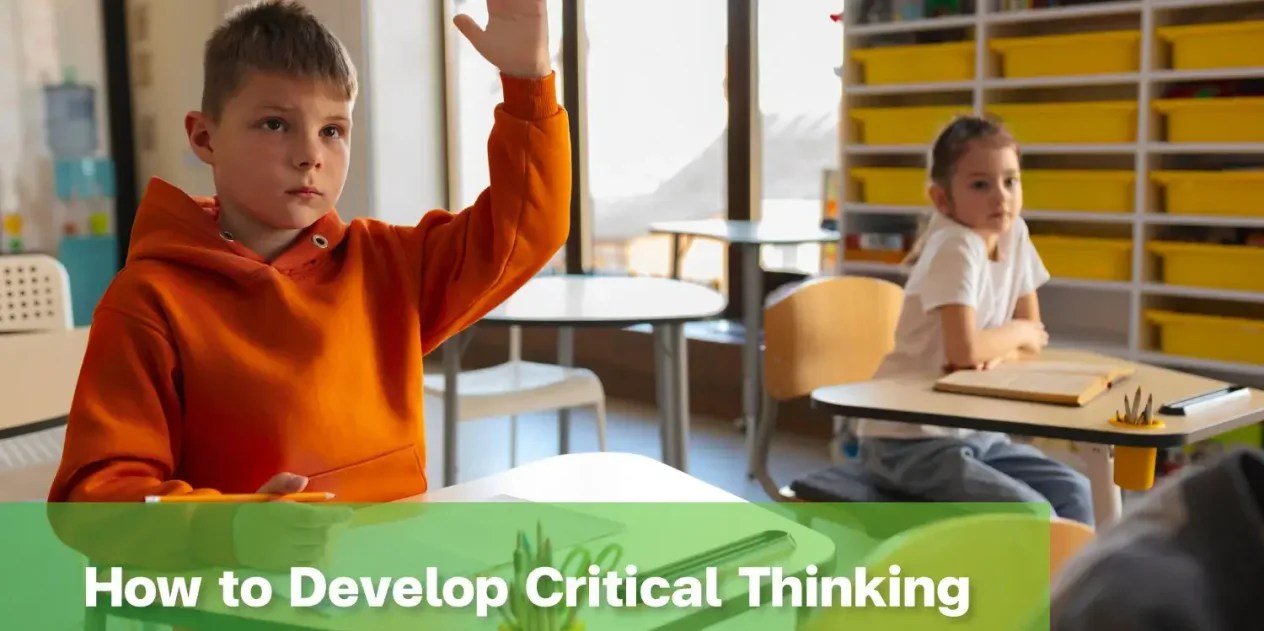
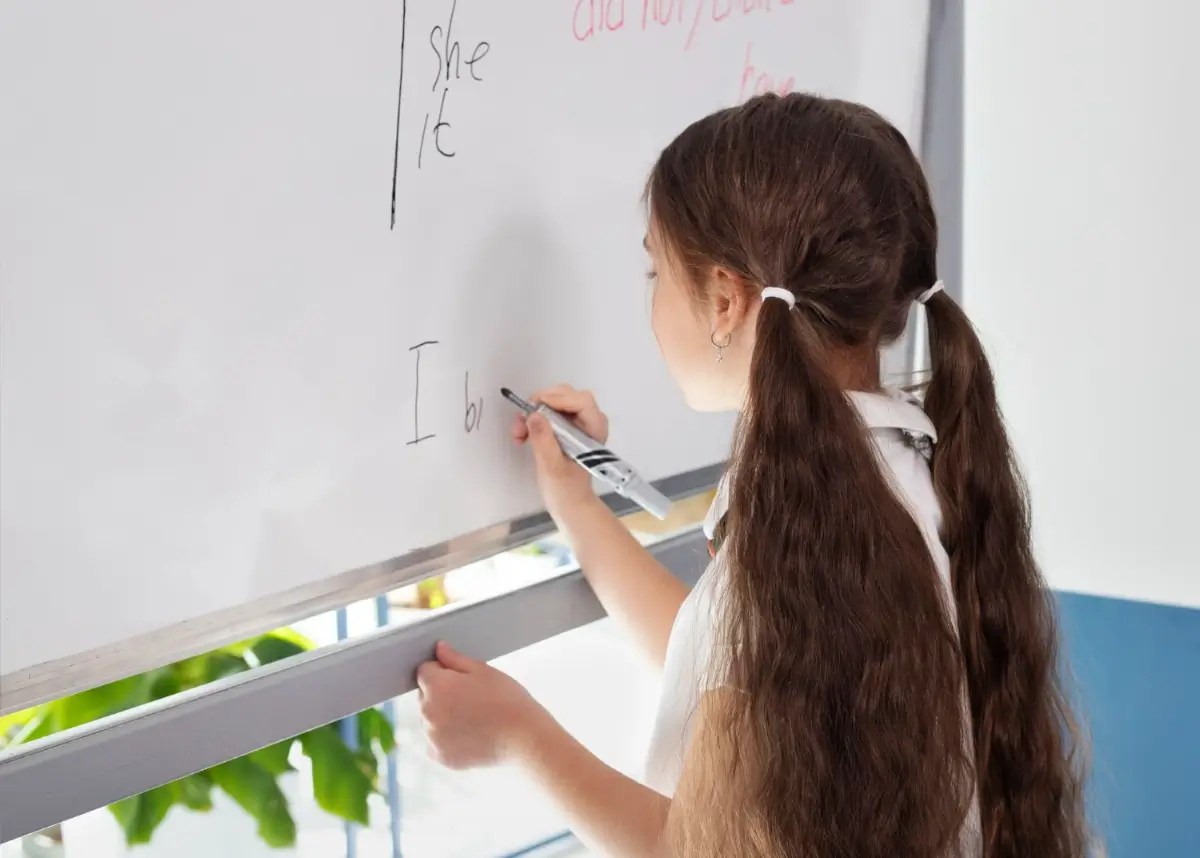
One of the most important approaches to critical thinking in schools is designing lessons that give students an active role in the learning process. Rather than receiving information from the teacher alone, students are encouraged to ask questions, experiment, share their opinions and explain their own thinking.
This approach demonstrates how to develop critical thinking through everyday learning experiences rather than treating it as a separate subject.
Using Open-Ended Questions Instead of Looking for Only One Answer
Open-ended questions are a natural way to encourage critical thinking because they do not always have an immediate answer that can simply be labelled right or wrong.
Rather than asking only when a particular event happened, a teacher might extend the discussion by asking why the event occurred, how the outcome might have been different if certain factors had changed, or why people involved in the event may have viewed the situation differently.
Questions like these help students analyse relationships between pieces of information, explain their reasoning and recognise that the same situation can sometimes be interpreted from more than one perspective.
Encouraging Discussion and the Exchange of Ideas
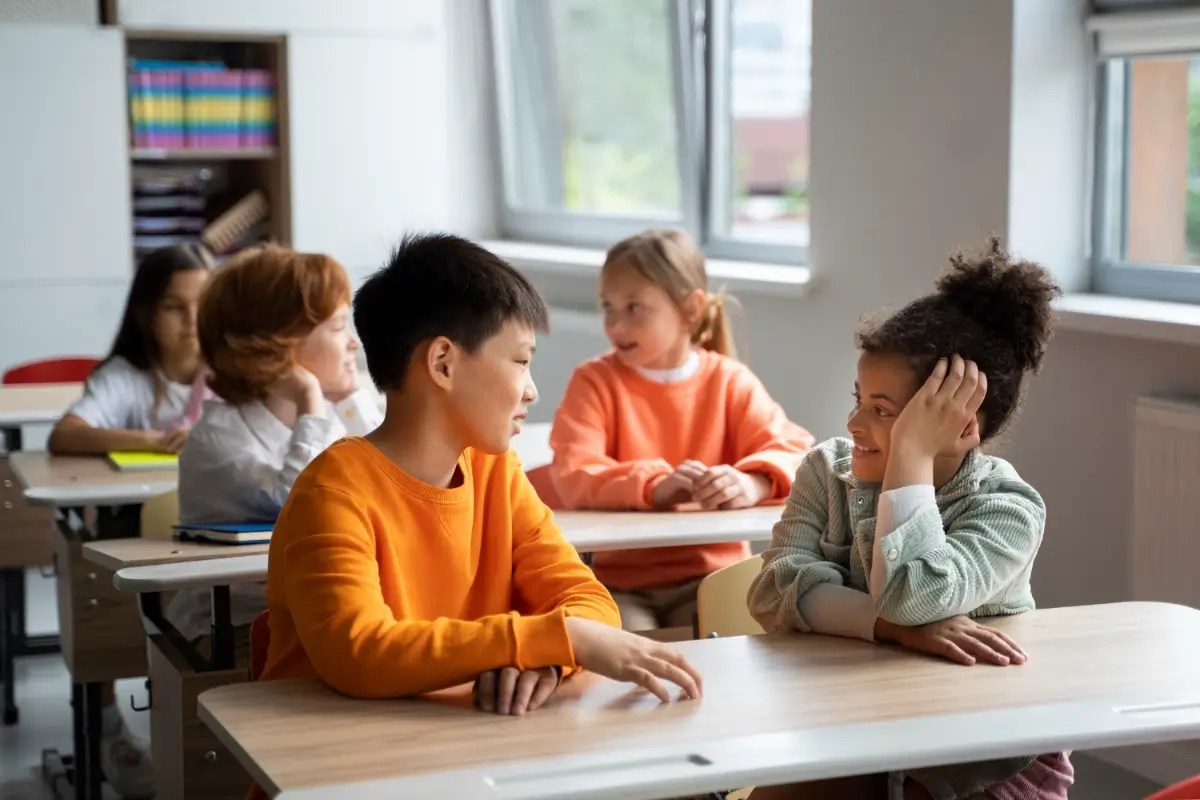
A classroom that gives students opportunities to discuss ideas helps children understand that learning does not come only from listening to a teacher. It can also develop through listening to the thoughts and perspectives of classmates.
During discussions, students need to consider how to explain their opinions, what information supports their ideas and how to respond respectfully to viewpoints that differ from their own.
Learning Through Problem Solving
Working with problems that require several stages of thinking is another effective way to develop critical thinking.
For example, in mathematics, students may not simply receive a problem with a formula that they can apply immediately. Instead, they may need to decide which method is most appropriate. In science, students might develop a hypothesis, plan an experiment, analyse the results and explain whether the evidence supports their original hypothesis. When the answer is not immediately available, children need to think, experiment, check their work and adjust their approach.
Connecting Knowledge Across Different Subjects
In real life, problems are rarely divided neatly into science, mathematics, languages or social sciences. Learning that connects several areas of knowledge can therefore help students develop a broader understanding of complex issues.
For example, studying an environmental issue may involve science to understand ecosystems, mathematics to analyse data, social studies to consider the impact on communities, and language skills to communicate ideas effectively.
Conclusion
Critical thinking is an essential skill that enables students to do more than simply receive information. It helps them ask questions, analyse evidence, compare different perspectives and make reasoned decisions independently.
Developing critical thinking skills for students should therefore be an ongoing process that takes place through classroom learning, projects, discussions, problem solving and opportunities to learn alongside people with a variety of perspectives.
Within an international school environment, children have opportunities to practise structured thinking while developing the confidence to express their opinions, listen to others and adjust their understanding when they encounter new information. Critical thinking in education not only supports academic achievement but also provides an important foundation for further study, future careers and everyday life.
For families who would like to experience the learning environment and see how critical thinking is developed in the classroom, book a school tour at St. Andrews International School, Green Valley today to explore the school, meet the team and gain a closer understanding of how students learn, think and develop throughout their educational journey.
Frequently Asked Questions About Critical Thinking in Education (FAQs)
Q: At What Age Should Children Begin Developing Critical Thinking Skills?
A: Children can begin developing critical thinking from an early age. There is no need to wait until secondary school. For younger children, activities that support critical thinking skills for students may include observing, comparing, asking questions and explaining the reasons behind what they notice. As children grow older, the complexity of these activities can gradually increase to include analysing information, considering evidence and evaluating different perspectives.
Q: How Is Critical Thinking Different from Problem Solving?
A: Although the two skills are closely connected, they have different areas of focus. Critical thinking involves analysing information, examining reasoning and assessing credibility before reaching a conclusion. Problem solving focuses more specifically on using available information and ideas to identify possible solutions to a particular challenge.
Q: How Can You Tell Whether a Student’s Critical Thinking Is Improving?
A: Progress may be reflected in the way students begin asking deeper questions, explaining their reasoning more clearly, recognising that a problem may have several different perspectives and adjusting their opinions when presented with new evidence.
Students may also become better at distinguishing between facts and opinions and identifying what information should be checked before making a decision. These behaviours can provide useful signs that critical thinking skills for students are developing over time.