Topic Summary: Play-based learning helps young children develop thinking, communication, confidence, creativity, social skills and physical abilities through meaningful exploration, imaginative activities and hands-on experiences in supportive Early Years learning environments.
Content Summary:
- Play-based learning supports children’s cognitive, social, emotional, physical and communication development through exploration, creativity and meaningful hands-on experiences.
- Play-based learning activities such as role play, block building, sensory play, nature play and creative tasks help children develop confidence, independence, problem solving and collaboration skills.
- A supportive Early Years environment allows children to learn at their own pace, follow their curiosity and build strong foundations for future learning.
For young children, play may appear to be a simple activity filled with laughter, movement and imagination. Yet behind these moments, children are constantly learning about the world around them through observation, questioning, experimentation, problem solving and communication with others.
This is why play-based learning plays such an important role in Early Years education. It allows children to learn through experiences that reflect the natural way they develop, rather than focusing only on memorising information or completing exercises. Children are given opportunities to explore independently and gradually build understanding through real experiences.
At St. Andrews International School, Green Valley, learning in the Early Years places strong emphasis on creating an environment that encourages curiosity and gives children the freedom to explore, experiment and make meaning from what they discover. This approach helps establish strong foundations for learning, confidence and the essential skills children need as they grow.
What Is Play-Based Learning?
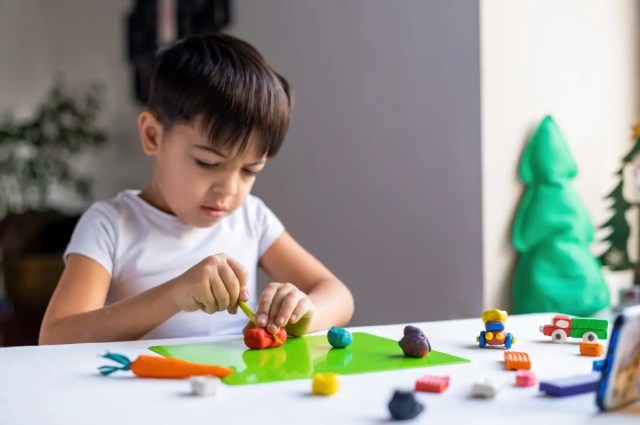
Play-based learning is an educational approach that uses play as a meaningful way for children to explore ideas, practise skills and develop understanding through experience.
The play-based learning definition includes everything from free play, where children choose and direct their own activities, to experiences in which teachers carefully prepare an environment or provide particular resources to encourage learning through active participation.
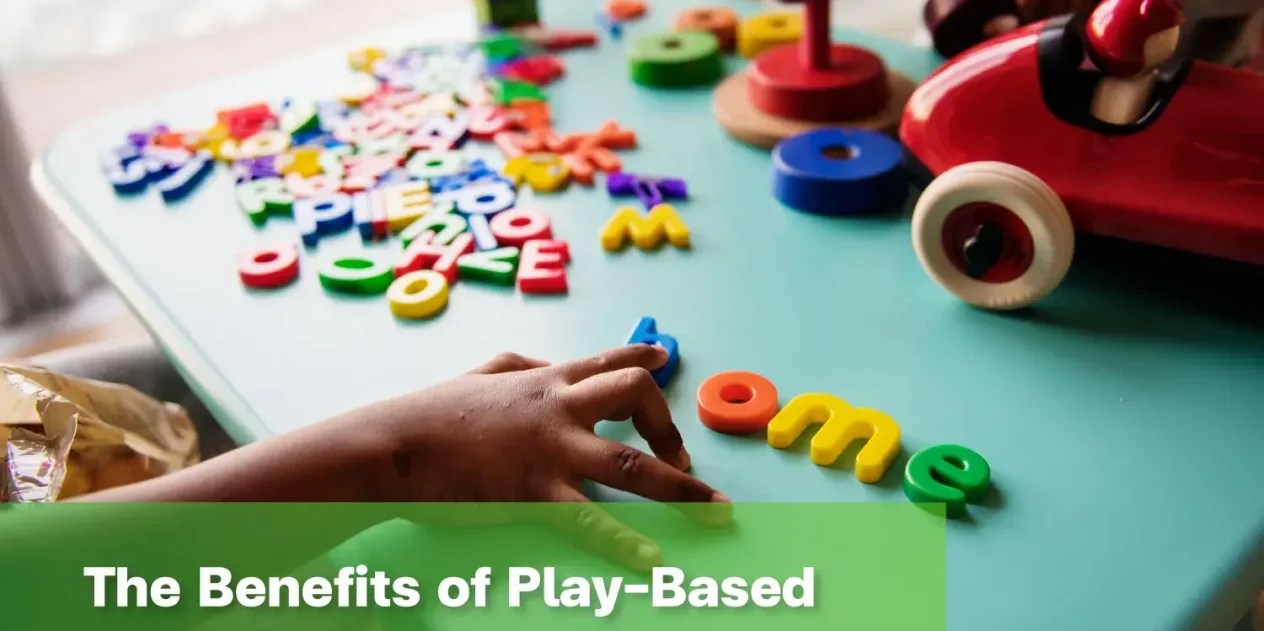
For example, building with blocks can help children learn about shapes, balance and problem solving, while playing shops can provide opportunities to practise language, counting and communication with friends at the same time.
What Are the Benefits of Play-Based Learning for Child Development?
One of the greatest strengths of play-based learning is that a single activity can support several areas of development at once. Children may begin playing simply because they are having fun or are curious about something, but during the experience they may also be developing thinking skills, communication, emotional regulation, physical coordination and the ability to interact with others.
These wide-ranging play-based learning benefits help explain why this approach is valued in Early Years education. Rather than separating learning into isolated skills, play-based learning and child development are connected through meaningful experiences that allow children to grow in several areas simultaneously.
Encouraging Thinking and Problem Solving
One of the clearest play-based learning benefits is that children have opportunities to work out solutions for themselves. Whether they are trying to fit pieces together, build a strong bridge or divide toys fairly among a group, children can experiment with different approaches and learn from the results.
These experiences help establish the foundations of logical thinking, flexible thinking and problem solving. Such skills become increasingly important as children encounter more complex challenges later in their education.
Developing Language and Communication
Playing with other children creates meaningful opportunities to use language. Children need to explain their ideas, ask questions, express what they want, listen to others and negotiate.
Role play involving restaurants, hospitals, shops or journeys into space can also encourage children to experiment with new vocabulary and create imaginative stories. When language learning takes place in a context children understand and enjoy, words and communication patterns gradually become connected to meaningful real-life experiences.
Helping Children Understand Emotions and Relationships
Play is one of the first environments in which children begin to understand that other people’s needs may be different from their own. During group play, children may need to wait for their turn, share toys, agree on rules or cope when things do not happen in the way they expected.
These experiences help children develop emotional regulation, empathy and relationship building skills. Even small disagreements during play can become valuable learning opportunities because children practise expressing their feelings and finding solutions that allow everyone to continue playing together.
Building Confidence and Independence
When children are able to choose what to play, which materials to use or how to solve a problem, they practise making decisions and learn that their own ideas have value.
Small achievements, such as completing a puzzle, building a house from blocks as they imagined it or creating their own rules for a game, can build a strong sense of pride and confidence. These experiences may be more meaningful than receiving an answer from an adult immediately.
As a result, children gradually become more independent, more willing to try unfamiliar experiences and better able to respond when something does not go according to plan.
Supporting Physical Development and Coordination
The relationship between play-based learning and child development also includes physical growth. Outdoor activities such as running, climbing, jumping and balancing can strengthen gross motor skills and physical coordination.
Activities such as drawing, modelling with clay, threading beads and connecting small construction pieces can develop fine motor skills and hand control. These abilities provide important foundations for everyday activities, including holding a pencil, writing and becoming more independent in self care.
Examples of Play-Based Learning Activities
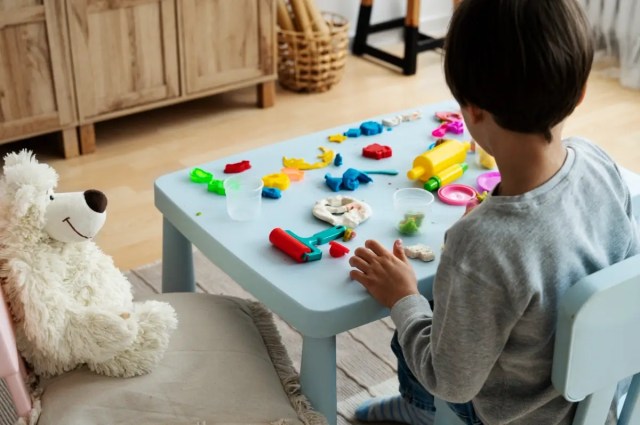
Effective play-based learning activities do not require complicated or expensive equipment. What matters most is that children have opportunities to think, experiment and create their own experiences.
- Imaginative role play Creating a shop, restaurant, home, hospital or other imagined setting allows children to use their creativity, practise language, understand social roles and learn how to work with their friends.
- Block play and construction Wooden blocks, construction pieces, boxes or recycled materials can become buildings, bridges, vehicles or even an entire city. These play-based learning activities support children’s understanding of space, shape, balance and problem solving.
- Nature play Leaves, soil, sand, water, branches and stones can all become valuable learning resources. These experiences can also support sensory play, allowing children to explore different textures, temperatures, colours, shapes and natural materials through their senses.
- Art and creative activities Drawing, modelling with clay, cutting, sticking and creating with different materials give children opportunities to express ideas and feelings in their own way.
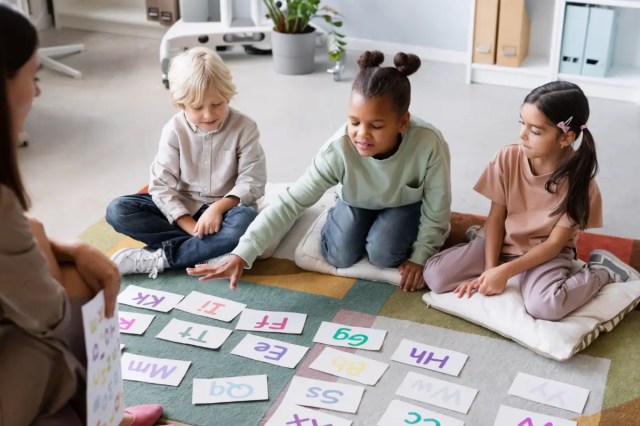
- Number and language games Counting toys, sorting objects by colour, matching items, reading stories or creating stories together can make mathematical and language concepts feel more meaningful and relevant to children’s everyday experiences.
A broad range of play-based learning activities allows children to explore different interests while developing skills at their own pace. This is one of the reasons the play-based learning definition extends beyond traditional toys and includes creative, social, physical and exploratory experiences.
Conclusion
Play-based learning is far more than a way of making the classroom enjoyable. Every time children make a choice, experiment, ask a question, create something or collaborate with others, they are gradually developing skills that matter for both education and everyday life.
Therefore, a supportive learning environment should give children opportunities to learn at their own pace, while teachers observe, encourage and help extend their interests into deeper learning experiences. When curiosity is supported thoughtfully, children can gradually become learners who are confident enough to think independently, try new ideas and search for answers themselves.
At St. Andrews International School, Green Valley, Early Years learning focuses on creating experiences that reflect the natural ways children learn, both in the classroom and across outdoor spaces and the wider school environment. This approach supports play-based learning and child development by allowing meaningful learning to take place naturally every day.
For families looking for an international school that values children’s development in every area, you can book a school tour to explore the learning environment, meet the teaching team and experience the school community for yourself.
Frequently Asked Questions About Play-Based Learning (FAQs)
Q: What age is play-based learning suitable for?
A: Play-based learning is particularly valuable during the Early Years because young children learn effectively through experience, movement and exploration. However, the principles of play-based learning can also be applied to older children by adapting activities to suit their age, interests and developmental level.
Q: How can you tell whether children are really learning through play?
A: Adults can observe children’s behaviour during play-based learning activities. Signs of learning may include asking questions, experimenting with new approaches, explaining what they are doing, connecting an activity with previous experiences or working collaboratively with others.
Q: Are expensive toys necessary for play-based learning?
A: No. Simple materials such as cardboard boxes, branches, fabric, containers and everyday household objects can all become valuable resources for play-based learning activities. The price of the equipment is far less important than giving children opportunities to think, make choices, experiment and use their imagination.